
Why the Right List Price Sells Your Home Faster
Every seller wants the same two things. The best possible price and a smooth sale that does not drag on for months. What surprises a lot of people is that those two goals are not in tension. They usually pull in the same direction, and the lever that ties them together is your list price. Set it well and the rest of the sale tends to fall into place. Set it wrong and even a beautiful home can sit. Here is how pricing really works, without the guesswork.
The market sets the value, not your asking price
It helps to start with a hard truth. Your list price is a marketing decision. The actual value of your home is whatever a ready buyer will pay for it, and that number is anchored to what similar homes nearby have recently sold for. Buyers today shop with a phone in hand and a good sense of comparable prices. They can tell within minutes whether a home is priced in line with the neighbourhood. So the job is not to pick a number you hope for. It is to read what the market is already telling you and position your home inside that reality.
The real cost of pricing too high
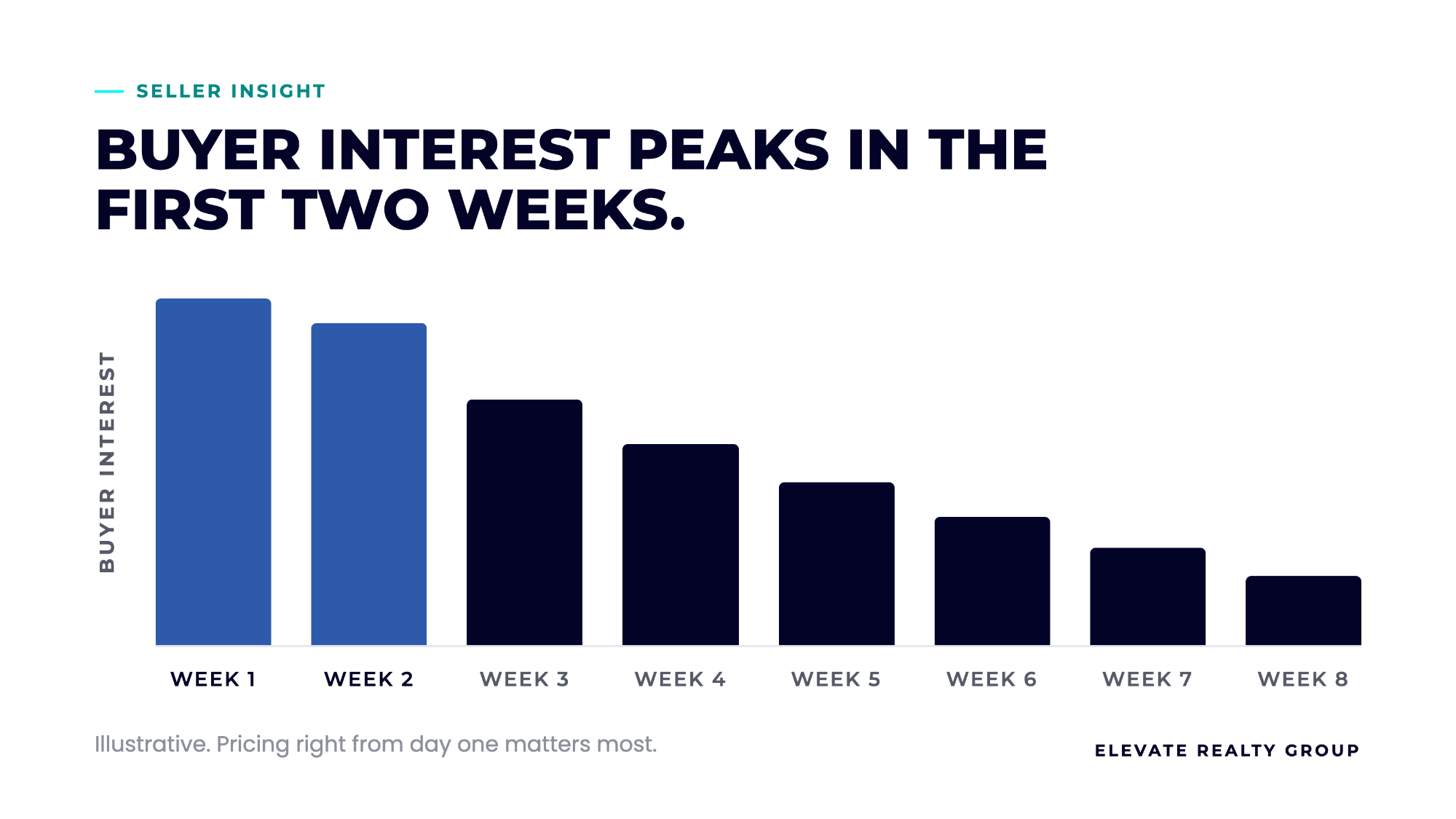
Aiming high feels safe. The thinking goes that you can always come down later. In practice, an inflated price often costs sellers money rather than protecting it. The most attention a listing ever gets is in its first couple of weeks, when it is fresh and every active buyer takes a look. Price it above what the market supports and those buyers quietly move on, the showings slow, and the listing starts to feel stale. By the time you correct the price, the early momentum is gone, and homes that linger tend to invite lower offers. The irony is that a home priced to sell often ends up selling for more, because interest early can turn into competing offers.
How a proper price gets built
A sound price comes from a comparative market analysis. That means looking at homes like yours that recently sold, ones currently listed, and ones that failed to sell, then adjusting for the differences. A finished basement, a newer roof, a premium lot, or a dated kitchen all move the number up or down. This is careful work, and it is specific to your home and your street. A number pulled from an online estimate tool or a neighbour's guess is a starting point at best. If you would like a proper read on your own home, that is exactly what a home evaluation is for.
Small moves that support your price
Pricing does not work in isolation. The condition and presentation of your home justify the number you are asking. A few modest efforts tend to pay for themselves.
| Step | Why it helps |
|---|---|
| Declutter and deep clean | Makes rooms feel larger and signals a home that has been cared for. |
| Handle small repairs | Little defects make buyers wonder what else was neglected. |
| Boost the front approach | First impressions form before a buyer steps inside. |
| Invest in quality photos | Most buyers meet your home online before they ever visit. |
Timing and the wider market
Where the market sits also shapes strategy. When listings are scarce and buyers plentiful, a confident price can draw multiple offers. When there are many homes competing, sharp pricing is what earns the showings in the first place. Neither situation rewards wishful thinking. The point is to price for the market you are actually selling into, not the one from a year ago or the one you hope returns. For a broad look at national conditions you can browse the Canadian Real Estate Association, though the number that matters most is always the local one for homes like yours.
I will pull the real comparable sales for your street and walk you through the range, with no pressure to list. Request a home evaluation or reach me through the contact page whenever you are ready.
Pricing a home well is part data and part judgment, and it rewards honesty over optimism. Get it right and your home does the selling for you. If you are starting to think about a move, the selling page lays out how the whole process works from first conversation to closing day.
Categories
Recent Posts









"My job is to find and attract mastery-based agents to the office, protect the culture, and make sure everyone is happy! "